
Views: 0 Author: Site Editor Publish Time: 2025-11-20 Origin: Site


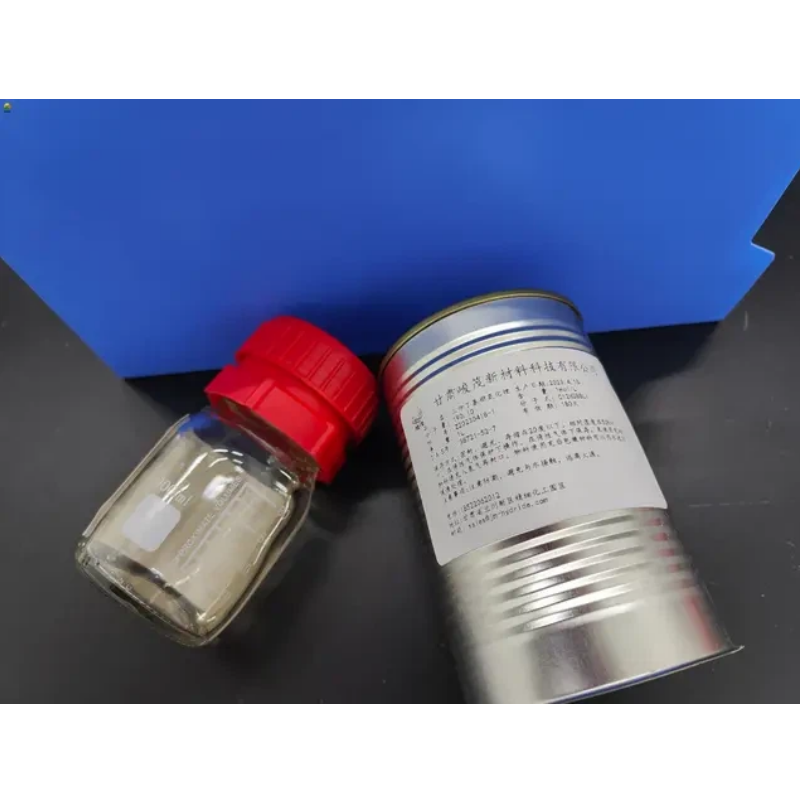
When the geometry of a molecule determines the entire outcome of a synthesis, chemists turn to reagents that offer precision, not brute strength. L-selectride has become one of those trusted reagents—an organoborane hydride that combines mildness with remarkable stereochemical control. Its ability to reduce specific carbonyl orientations without overreacting has made it indispensable in fine chemical, pharmaceutical, and material synthesis. Produced by Gansu Junmao New Material Technology Co., Ltd., this high-performance reagent is available in stable solution forms that support consistent industrial use and reliable batch-to-batch selectivity.
L-selectride is formally lithium tri-sec-butylborohydride, an organoborane complex with three secondary butyl groups surrounding a boron center. This bulky structure significantly differentiates it from simpler hydrides such as lithium aluminum hydride or sodium borohydride. The compound usually appears as a colorless crystalline solid, though commercial grades are supplied as pale yellow transparent solutions. In industry, it is commonly formulated in tetrahydrofuran (THF), which stabilizes the hydride and ensures smooth delivery during reaction.
Its solubility behavior reflects its polar nature: insoluble in non-polar solvents at ambient temperature but readily soluble in polar ethers such as diethyl ether, THF, and even in donor solvents like methanol and acetonitrile. These properties make it easy to incorporate into homogeneous reductions or to mix with substrate solutions in standard laboratory and pilot-scale reactors.
Beyond its role as a selective reducing agent, L-selectride also participates as a boron source in carbon–carbon bond forming reactions, including Grignard-type additions, arylations, and cyclization processes. This versatility highlights its value not just as a hydride donor, but as a multifunctional organoborane reagent capable of building molecular complexity.
The secret behind L-selectride’s stereoselective power lies in its steric design. Each sec-butyl group attached to boron creates a spatial shield, dictating the trajectory from which the hydride can approach an electrophilic carbon center. When reducing carbonyl compounds, such as ketones or aldehydes, this bulky structure prevents attack from the more hindered face of the molecule.
In a typical ketone reduction, for example, the hydride transfers preferentially to the less crowded side, forming an alcohol with defined configuration. This selectivity often matches or even surpasses that achieved with chiral catalysts. Moreover, the lithium cation coordinates to the oxygen atom of the carbonyl, aligning the reagent in a way that reinforces the sterically controlled pathway.
The reagent’s conformation in solution also contributes to its predictable selectivity. Studies indicate that L-selectride exists as an aggregated ion pair in THF, where lithium associates closely with oxygen donors. This aggregation stabilizes the hydride transfer transition state and restricts undesired approaches, leading to reproducible stereochemical outcomes.
The most common application of L-selectride is the reduction of carbonyl compounds to alcohols. In asymmetric or cyclic ketones, the reagent favors the axial attack, giving products with high diastereoselectivity. For instance, in the reduction of menthone, it delivers predominantly the equatorial alcohol, while other hydrides may produce mixtures.
In conjugate reduction of α,β-unsaturated carbonyl compounds (enones), L-selectride shows strong 1,4-selectivity. Instead of attacking the carbonyl carbon directly, the bulky reagent delivers hydride to the β-carbon, producing saturated carbonyls with minimal overreduction. This makes it invaluable in total syntheses where conjugated systems must be reduced without affecting adjacent functionalities.
It is also employed for selective reduction of esters, amides, and lactones under mild conditions—especially when more reactive hydrides like lithium aluminum hydride would cause overreduction or cleavage. In these cases, L-selectride’s lower basicity and controlled reactivity yield smoother conversions.
Chemists frequently exploit its chemoselectivity to reduce one functional group in the presence of others. For example, in molecules bearing both ketone and ester moieties, L-selectride can target the ketone selectively, leaving the ester untouched. This precision allows stepwise synthesis of complex intermediates without protective groups, improving efficiency and atom economy.
Reaction conditions play a defining role in how L-selectride performs. Temperature, solvent choice, and reagent concentration can each shift the stereochemical outcome. Lower temperatures (around –78 °C) often increase stereocontrol by slowing competing pathways and maintaining the preferred transition state geometry.
Solvent polarity affects ion pairing: polar ethers like THF promote tighter lithium–oxygen coordination, enhancing the directing effect of the carbonyl group. Less polar solvents loosen this coordination and may reduce selectivity. Therefore, reactions requiring high enantio- or diastereocontrol typically employ THF or mixtures of THF with minor co-solvents to fine-tune solubility and reactivity.
Concentration also matters. Dilute solutions reduce aggregation and can improve uniformity in hydride delivery, whereas overly concentrated mixtures may form higher-order aggregates that alter reaction rates. Industrial-scale processes often optimize both molar ratio and concentration to achieve the balance between throughput and precision.
These subtle dependencies are why suppliers like Gansu Junmao New Material Technology Co., Ltd. maintain rigorous control over solution formulation, ensuring that every batch of L-selectride exhibits consistent molarity and purity—key parameters for reproducible selectivity.
Despite being milder than many metal hydrides, L-selectride remains a reactive substance. It reacts violently with water, alcohols, and other protic materials, releasing hydrogen gas and generating heat. Therefore, all manipulations should occur under inert atmosphere—typically argon or nitrogen—and with completely dry equipment.
Storage stability is another consideration. The reagent should be kept in sealed containers, away from air and moisture, and ideally refrigerated to slow decomposition. Commercial solutions in THF are generally stable for extended periods when properly sealed.
When quenching the reaction, controlled procedures must be followed to prevent exothermic incidents. A standard method involves gradual addition of an alcohol such as isopropanol under cooling, followed by water. This stepwise quench minimizes heat generation and ensures safe neutralization of residual hydride.
Personnel handling L-selectride must wear protective clothing, gloves, and face shields. Proper ventilation and fire suppression systems should be in place, given the flammable solvents used in conjunction with the reagent.
Industrial and laboratory users require reliable quality to maintain process integrity. Gansu Junmao New Material Technology Co., Ltd. supplies L-selectride in precisely titrated THF solutions, ensuring accurate concentration and long-term stability. Each lot undergoes rigorous testing for active hydride content, metal ion balance, and solvent purity.
Such stringent quality control provides confidence for researchers scaling up sensitive reactions or producing high-value intermediates. The consistency across batches reduces the need for pre-use titration and simplifies validation, saving both time and cost. Furthermore, the company’s hydride expertise—spanning lithium aluminum hydride, lithium borohydride, and tert-butoxy aluminum hydrides—guarantees deep understanding of handling and storage challenges.
Performance guarantees cover not only chemical purity but also reproducibility of reduction behavior under standard laboratory conditions. By providing detailed product documentation and technical support, the company helps customers integrate L-selectride smoothly into established workflows.
L-selectride has proven particularly effective in constructing chiral building blocks and fragments for natural product synthesis. Its ability to favor one stereochemical orientation enables efficient access to optically pure alcohols and intermediates that serve as cornerstones in pharmaceuticals and agrochemicals.
In large-scale synthesis, it supports high-yield transformations of carbonyls without overreduction or by-product formation, thus reducing purification costs. The reagent’s mildness also allows it to operate late in synthetic sequences, where sensitive groups such as halides, esters, or protecting groups must remain intact.
Chemists developing fine chemicals exploit L-selectride’s selectivity to introduce controlled reductions in multi-step syntheses. For instance, it can convert α,β-unsaturated ketones into saturated alcohols while maintaining configuration at neighboring chiral centers. This control makes it indispensable in producing intermediates for vitamins, fragrances, and specialty polymers.
Furthermore, the reagent’s predictable reactivity allows seamless transition from bench-scale experiments to industrial production. With reliable supply from Gansu Junmao New Material Technology Co., Ltd., customers can depend on consistent stereochemical outcomes—critical when scaling complex reactions from grams to kilograms.
Precision, reliability, and stereochemical control define the modern role of L-selectride in selective reductions. As molecular architectures grow more complex, this reagent remains a cornerstone for achieving controlled hydride delivery without compromising sensitive functionalities. Gansu Junmao New Material Technology Co., Ltd. provides stable, high-quality L-selectride solutions that empower chemists to execute these transformations with confidence. For formulation guidance, safety data, or compatibility tests with your specific substrate, contact us today to learn more about selectride reagents suited to your workflow.
1. What makes L-selectride more selective than other hydride reagents?
Its bulky sec-butyl groups block certain approach angles to the carbonyl, forcing the hydride to attack from the less hindered side, which leads to predictable stereochemistry.
2. In what solvent is L-selectride usually supplied?
It is most commonly supplied as a solution in tetrahydrofuran (THF), which stabilizes the reagent and ensures consistent reactivity.
3. Can L-selectride be used for conjugate (1,4-) reductions?
Yes, L-selectride efficiently performs 1,4-reductions on α,β-unsaturated carbonyl compounds, providing saturated products with minimal overreduction.
4. How should L-selectride solutions be stored?
They should be kept tightly sealed under inert gas, away from moisture and heat sources. Refrigerated storage in a dry environment preserves stability for long-term use.


